How I’m Thinking about Research + Collage in a Project about Body Positivity
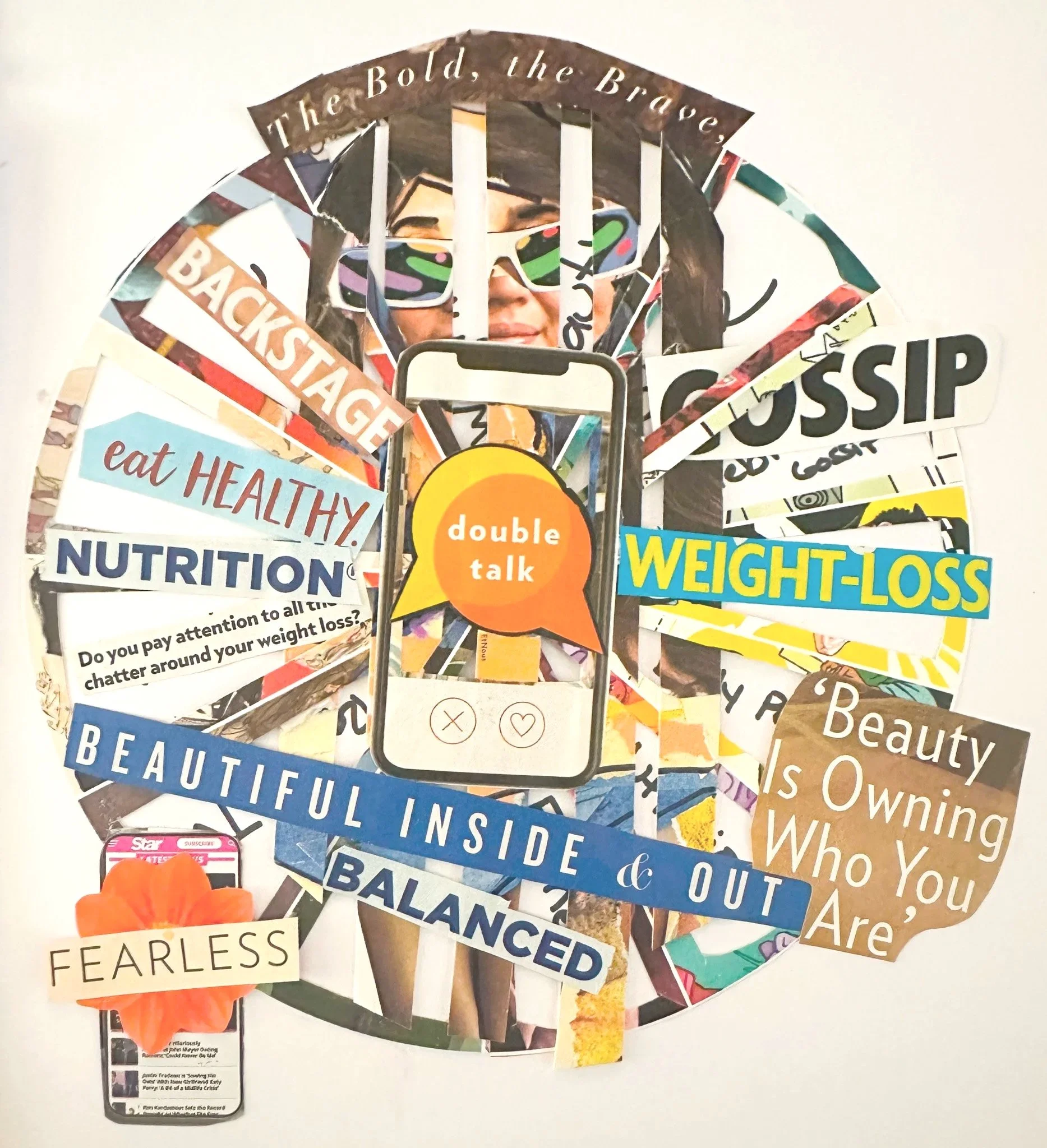
Collage of conflicting body positivity messaging and digital imagery.
My mental health side hobby is making collages (see the header images for this blog), and as I’ve gotten more into the practice I’m increasingly drawing connections between how I think about art and how I think about research.
One aspect of collage that I appreciate as a media researcher is the way it makes us think about meaning and juxtaposition. By taking images out of their original contexts and remixing them, we can comment on, question, disrupt or reinterpret their original meaning. As a media scholar, I am constantly thinking about meaning, language, and power. Collage is historically an art form that does the same. Feminist ways of knowing are all about questioning the basis of knowledge and fact, and collage has long been taken up as a feminist practice meant to question and talk back to a patriarchal society.
I see research as collage. Instead of combining paper images together to create new meaning, I combine bits of theory, concepts, and ideas to texts, practices, and discourses that I want to make sense of. Often when I’m making a collage, I’ll lay down an image and test out various configurations and pairings until the image clicks into place (this doesn’t always happen, I’m still pretty new to the art form). I often do the same thing when I working on a new research project. I’ll collect data about something I’m trying to understand - in my current project it’s 125 TikTok videos about body positivity influencers -and then test out various configurations of theoretical concepts until things start to click into place.
Different theoretical concepts highlight different aspects of the data. It may be that I end up with three different articles about the same set of data from three different theoretical perspectives. The pairing of the data with different theoretical concepts can bring different meanings to the forefront in the same way pairing different images will illuminate different aspects of those images.
——
Here’s an example!
The research question that started this project was: “How do followers respond when influencers who gained popularity in the ‘body positive’ space lose a significant amount of weight and/or start talking about dieting and exercising on their pages?”
Once I collected a set of TikTok video reactions to a particular incident of an influencer discussing their own weight loss and content pivot, I analyzed the themes in the videos to get a general sense of what kinds of responses there were.
Then, I set out in search of past theoretical work that might offer useful lenses through which to better understand these themes and what they illustrate about social media backlash, influencer culture, body positivity, and fatphobia.
Below are three themes I’m exploring. For each, I used the same base image (a portrait I made last summer) in a collage that tries to capture the gist of the article pull quotes.
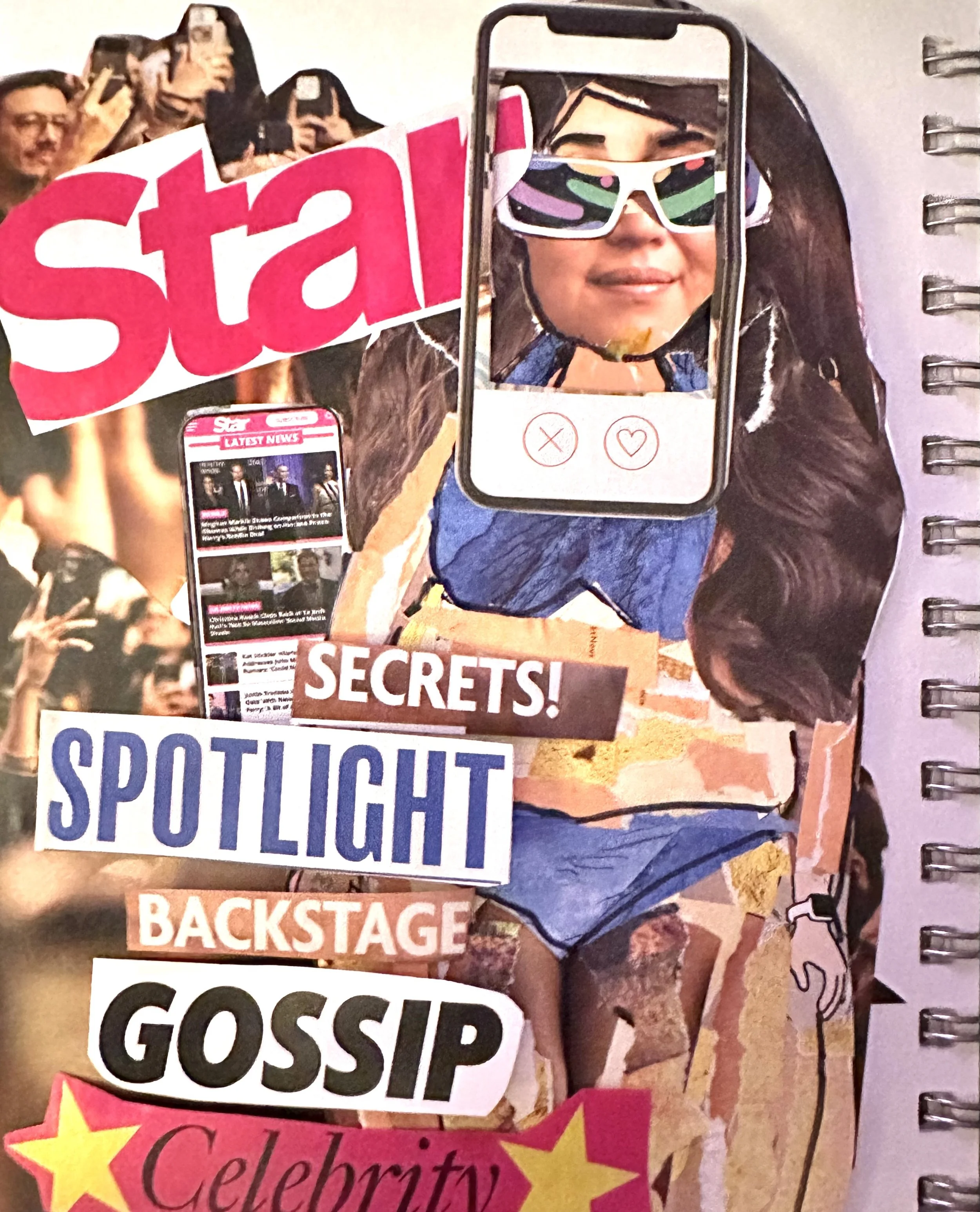
Influencers, Branding, and Celebrity
“[…] the affective and commercial appeal of postfeminist celebrity culture depends on the commodification and gendering of authenticity whereby the currency of “realness” is harnessed to neoliberal and postfeminist expressions of self-branding, entrepreneurship and feminine agency.” (Stéphanie Genz 2015, 547).
One key theme highlighted in my collected response videos is the tension between “authenticity” and “branding.” Many videos debated what influencers “owe” their followers in terms of both brand consistency and personal authenticity. What, if anything, do influencers ethically owe their followers? Are body positive influencers acting unethically when they aren’t transparent about their so-called “weight loss journeys” (a term I have come to hate). There is a whole field of research on this topic that explores the gendered expectations around the performance and monetization of authenticity especially in the digital age.
Body Positivity + the Reinforcing of Beauty Norms
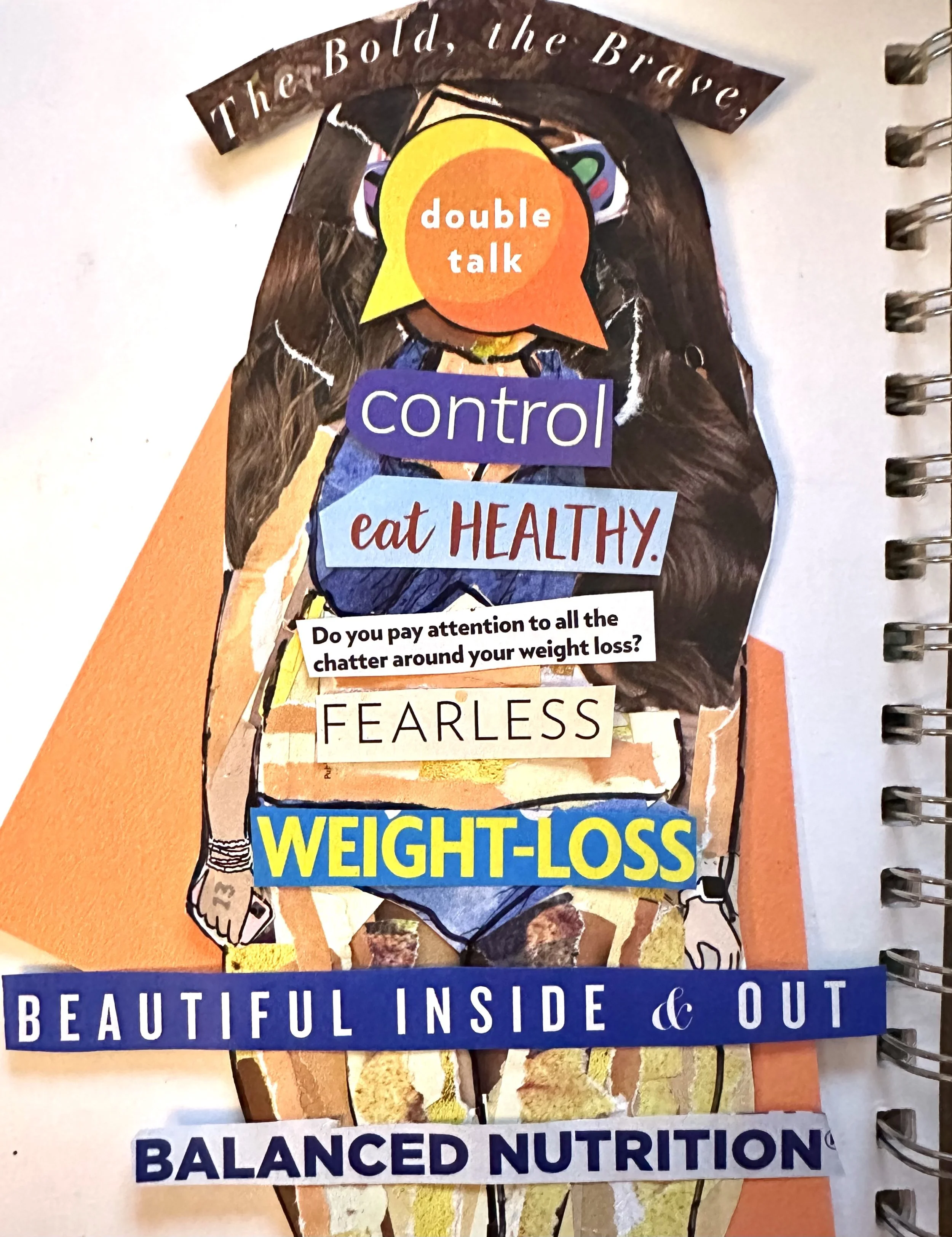
“Body positive spaces thus foster corporeal performances that all too readily become mimetic of the very norms they seek to counter. Yet what would it take for body positive websites to actually operate as what Anita Harris calls “border spaces . . . , [those] potentially ideal locales for the creation of narratives that disrupt hegemonic discourses?” (Alexandra Sastre 2004, 156).
A second theme in the data is a debate about what body positivity is, what it should be, and if it is politically or personally useful.
I had my own thoughts about body positivity, but the literature on the topic has been clarifying in understanding its history, how it has been studied, and if it has led to any actual material changes. The above article argues that digital body positivity mostly reinforces idealized versions of the body and reinforces self-conscious obsession over our own bodies, but that there are glimmers of something more radical that might be harnessed in the future.
This article helps to contextualize the way the videos talk about body positivity and the ambivalence with which they both police its boundaries and understand its political and psychological usefulness.
Social Media Enclaves
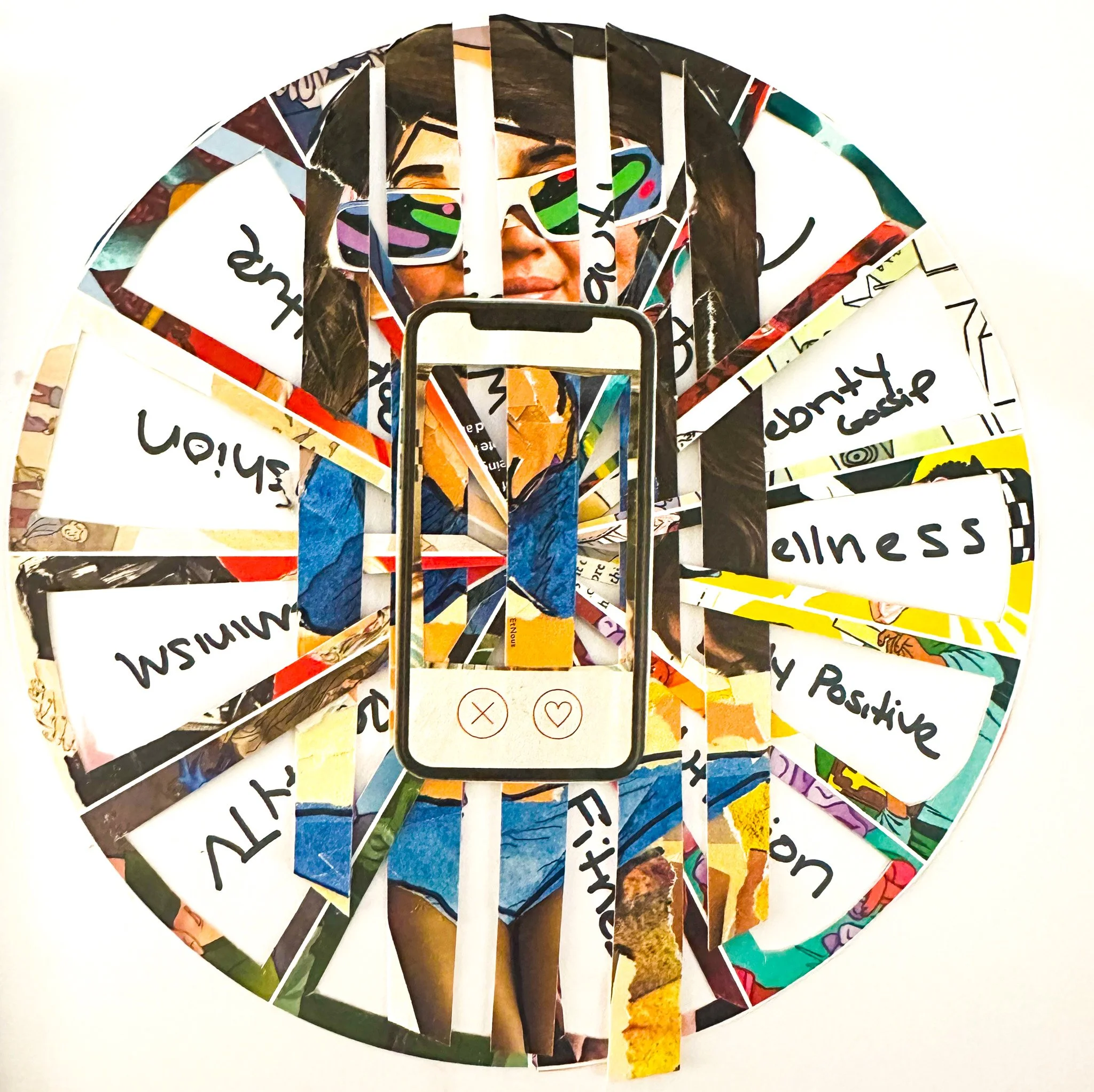
“ ‘Sides of TikTok’ is a platform vernacular created and adopted by users to describe their experiences engaging with algorithmically curated, similar types of content, as well as the subsequent collectives forming around them. But what are the practices tethering a side of TikTok together, and how does the app itself play a role?” (Jess Maddox and Fiona Gill 2023, 2).
Finally, I’m interested in how the conversation around body positivity, weight loss, and influencer responsibility illustrates the structures of social media’s so-called “sides.” How do the algorithms of these platforms contribute to and detract from community-building? How are debates, backlashes, and conversations around topics and figures shaped by platforms? How do debates about certain topics “break containment” and draw in users, followers, and creators from different, often overlapping subcommunities?
—
I had my own initial reactions to the debates I saw playing across my one TikTok FYP, but diving into the research gave me a much richer vocabulary and theoretical understanding of how to make sense of it all.
By looking at our data through different conceptual and theoretical lenses offered by other researchers and scholars (who in turn, have done the same thing), we create new meanings, vocabularies, and approaches. To me, this feels very much like what the best collage artists do: create new ways of understanding by searching for and remixing what has been created before.